
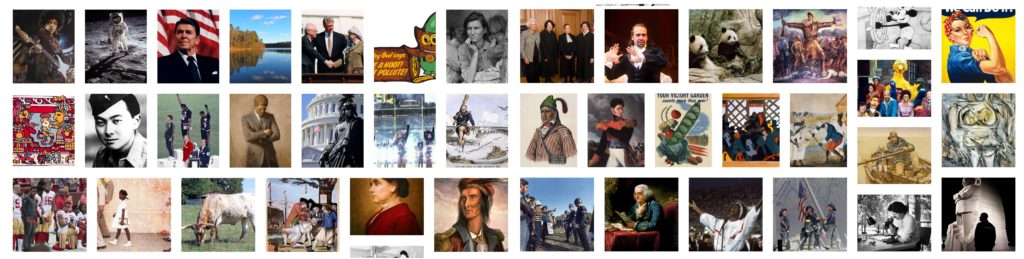
Overview
Inquiry History is a comprehensive, free, and open-source US History curriculum built on the C3 Framework for inquiry-based learning. Developed over 10 years (starting December 2015) by a practicing classroom teacher, it provides 19 units and 81 lessons covering US History from pre-Columbus through the present day, designed specifically to be accessible for diverse learners, including English Learners and students with varying reading levels and learning styles.
The curriculum offers two main pathways:
- AP US History (Full Course):
19 units covering pre-Columbian America to the present (81 lessons)
- US History 1877 to Present:
Unit 0 (review) + Units 9-19 (54 lessons total: 4 review lessons + 50 main lessons)
Every unit is structured around a compelling question (e.g., “Did anyone win the Cold War?”), with individual lessons addressing supporting questions that build toward answering the unit’s central inquiry. This approach moves students beyond passive memorization to active critical thinking about historical events and their significance.
Materials are available in multiple formats and modalities including print and online text. For the course 1877 to the present all the texts are written at two different reading levels. There are translations online and printable side-by-side translations (Ilocano, Japanese, Tagalog, Chinese, and more), human-narrated audiobooks, YouTube scrolling-text videos, and teacher-led explanation videos.
Creator: Jonathan Loomis, History Teacher, McKinley High School, Urban Honolulu, Hawaii
Website: inquiryhistory.com
License: Creative Commons Attribution 4.0 International (free to use, share, and adapt)
Free Forever: All InquiryHistory materials are permanently free. Because the original source materials are open source, Inquiry History content cannot be monetized or sold under the Creative Commons licensing agreement. Materials may be freely remixed and adapted, but they cannot be sold.
📑 Table of Contents
Other Resources
- ↗️ FAQs
🎯 Program Purpose & Goals
Provide a complete, inquiry-based US History curriculum that:
- Makes American history accessible to all students, regardless of reading level, language proficiency, and learning style
- Structures learning around compelling questions rather than passive reading
- Offers free, open-source materials that teachers can adapt and use
🧠 Pedagogical Framework
C3 Framework for Social Studies
The C3 Framework emphasizes learning history through inquiry and questions rather than passive memorization.
Structure:
- Compelling Questions (unit-level): Big, overarching questions that drive entire units
- Supporting Questions (lesson-level): Focused questions that help answer the compelling question
Example – Unit 15: The Cold War
- Compelling Question: “Did anyone win the Cold War?”
- Supporting Questions:
- “Was the Cold War unavoidable?”
- “Was containment the right way to deal with the spread of communism?”
- “Did American leaders respond wisely to the threat of communism?”
- “Did the Cold War hurt America?”
- “Was the Soviet Union really an evil empire?”
- “Why did the Cold War end?”
Example – Unit 13: The Great Depression and New Deal
- Compelling Question: “Was the New Deal a good deal?”
- Supporting Questions:
- “To what extent does money control our lives?”
- “Did President Hoover deserve to lose his bid for reelection?”
- “Should the government be responsible for the welfare of everyone?”
- “Was President Franklin Roosevelt liberal?”
Building Student Inquiry Skills
One of the core theories behind structuring the entire course around inquiry questions is to help students develop their own inquiry skills. Students often have difficulty developing their own inquiry questions. By providing compelling questions and supporting questions for every unit and lesson, students are constantly exposed to inquiry thinking. Through this repeated exposure, inquiry becomes second nature and students become accustomed to thinking through questions and developing their own lines of inquiry.
As students progress through the course, they become better equipped to create their own questions for research projects or when analyzing historical sources. For example, if a teacher provides a photograph from history, students will be better able to formulate meaningful questions about it. When asked to conduct independent research, students will understand how compelling questions and supporting questions work together, allowing them to structure their own historical investigations more effectively.
Alignment with Hawaii Standards
The curriculum aligns with Hawaii Board of Education standards adopted in 2018.
Link to the HCSSS Standards Alignment Document
⚙️ Curriculum Structure
Scope & Coverage
Full AP US History Course:
- 19 units covering US History from pre-1492 through present day
- 81 lessons (3-6 lessons per unit)
1877 to the Present
- Unit 0 (review): 4 lessons reviewing pre-1877 history
- Units 9-19: 50 lessons covering 1877 to present
- Total: 54 lessons
Each unit includes:
- Unit introduction addressing the compelling question
- 3-6 lessons, each structured around a supporting question
- Lesson introductions and conclusions (one paragraph each) setting up the supporting question
- Unit conclusion synthesizing material and drawing it back to the unit’s compelling question
↔️ Two Main Curriculum Pathways
Inquiry History offers two distinct pathways to accommodate different course structures and student needs:
Pathway 1: AP US History (Full Course)
Coverage: All 19 units covering US History from pre-Columbus through present (81 lessons)
Target Audience:
Advanced students, AP students, strong readers
Reading Level: 11th-12th grade
Available Materials: Text (PDF and online), audiobook, scrolling text videos, vocabulary tools, note-taking templates, and basic teacher’s guide
Pathway 2: US History 1877 to Present
Coverage: Unit 0 (review) + Units 9-19 covering 1877-present (54 lessons: 4 review + 50 main)
Target Audience: Students needing differentiated support, English Learners, students with varying reading abilities
Reading Level: Two options—original 11th-12th grade text OR simplified 8th/9th grade level text
Available Materials: Text (online only), lecture videos, vocabulary tools, lesson summaries, note-taking templates, and comprehensive teacher’s guide with review materials
Key Feature: This pathway offers simplified reading level texts and teacher-led lecture videos, making it ideal for differentiated instruction
Suggested Pacing Guide for Pathway 2: US History 1877 to Present
This condensed scope and sequence provides suggested pacing for the 54 lessons, organized by quarter.
First Quarter
- Unit 0: Review of Early American History
(4 lessons) – The Origins of America, The Revolution & the New Government, Westward Expansion, The Civil War
- Unit 9: Gilded Age Business, Labor & Government
(4 lessons) – The Industrialists, Corruption & Philanthropy, Organized Labor, Government Regulation
- Unit 10: Gilded Age Immigration, Urbanization & Reform
(4 lessons) – Immigration & Urbanization, Writers & the Yellow Press, The Progressives, Women’s Rights
- Unit 11a: Imperialism
(3 lessons) – Origins of Imperialism, Spanish-American & Philippine-American Wars, Asia & Latin America
Second Quarter
- Unit 11b: World War I
(3 lessons) – Neutrality & the Start of World War I, The World War I Homefront, The End of World War I & Isolationism
- Unit 12: The 1920s
(4 lessons) – Politics, Innovation & the Economy, Popular Culture, The Harlem Renaissance, Social Conflicts
- Unit 13: Great Depression & New Deal
(4 lessons) – The Start of the Depression, Life in the Depression, The First New Deal, The Second New Deal
- Unit 14: World War II
(3 lessons) – Neutrality & Pearl Harbor, Winning the War, The World War II Homefront
Third Quarter
- Unit 15: The Cold War
(6 lessons) – Origins of the Cold War, Containment, The Arms Race, The Cold War at Home, The Later Cold War, The End of the Cold War
- Unit 16: The Civil Rights Movements
(4 lessons) – School Desegregation, Marches & Successes, Frustration & Violence, Other Movements
- Unit 17: The Social Revolution
(6 lessons) – The 1950s, The Counterculture, The Great Society, Environmentalism, The Feminist Movement, The Conservative Revolution
Fourth Quarter
- Unit 18: Failures
(3 lessons) – Vietnam, Scandals, Globalization
- Unit 19: The Past 30 Years
(6 lessons) – The Post-Cold War World, The War on Terror & Gun Violence, The American People, Race in Contemporary America, The Digital Revolution, Contemporary Politics
- Review for an End-of-Course Exam
📦 Resources Overview
Inquiry History provides a comprehensive set of instructional materials organized into Primary Resources (core content delivery) and Supplemental Resources (supporting materials for students and teachers).
Understanding Reading Levels and Pathways
Inquiry History offers materials at two different reading levels with corresponding video formats, designed to meet the needs of all learners:
Reading Levels:
- Higher Reading Level (11th-12th grade):
Available for all 19 units (full AP US History course)
- Lower Reading Level (approximately 8th grade):
Available only for Unit 0 (review) and Units 9-19 (1877 to Present pathway)
How Students Navigate the Website:
When students first visit inquiryhistory.com, they choose between two pathways:
- AP US History:
Students are directed to higher reading level texts by default, with links to scrolling text videos
- 1877 to Present US History:
Students are directed to lower reading level texts by default, with links to lecture videos
Flexibility: On every reading page, students have the option to switch to the other reading level, regardless of which pathway they initially chose. This allows students and teachers to make real-time decisions about which reading level best suits their needs for any given lesson.
Primary Content Delivery Materials
These are the core materials students use to learn the historical content.
Text Resources
Higher Reading Level Text (11th-12th grade)
- Coverage: Units 1-19 (does not include Unit 0)
-
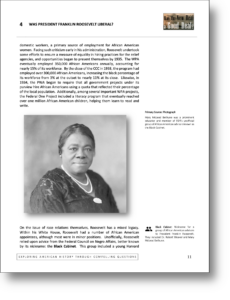
PDF Textbook with Key Terms Available Formats:
- PDF version (printable booklets)
- PDF format ready to print in booklets for each unit
- Includes introduction and conclusion to each reading
- Each reading has about 3-5 images
- Summary with big idea appears at the end of the text
- Vocabulary terms defined side-by-side with the text
- Vocabulary terms also appear as a list at the end of the text
- For some chapters, translations available in PDF format with side-by-side English original (may contain errors)
- Advantages: Easy for students to carry; some students prefer paper to screens; does not require internet connection
- Disadvantages: Few images; Xerox print is black and white; requires a lot of paper and time to copy; class time spent distributing; no audiobook integration; limited translations
-
Website version (online text with human-narrated audiobook and auto-translation)
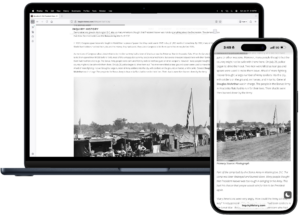
The online textbook - Platform: WordPress-based with responsive design (optimized for mobile, tablet, and desktop)
- Accessibility: WCAG 2.1 Level AA compliant
- Dark mode, high contrast, and large print toggles for enhanced accessibility and reading comfort
- Built-in translation plugin for automatic translation into multiple languages
- Each reading has the same 3-5 images as the PDF versions
- Summary with big idea appears at the end of the text
- Vocabulary terms appear as a list at the end of the text
- Audio option available for students to listen to or for reading along
- Video links to scrolling text videos
- Advantages: Students can access at any time; does not require distribution of paper copies; audiobook option; translations on demand
- Disadvantages: Some students don’t like reading on acreens; requires internet access and a device
- PDF version (printable booklets)
Lower Reading Level Text (approximately 8th grade)
- Coverage:Unit 0 (review) + Units 9-19
-
Available Formats:
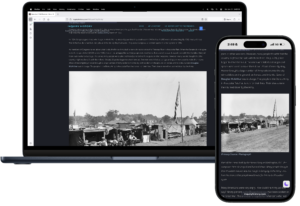
Dark Mode -
Website version only (online text with auto-translation)
- Platform: WordPress-based with responsive design (optimized for mobile, tablet, and desktop)
- Accessibility: WCAG 2.1 Level AA compliant
- Dark mode, high contrast, and large print toggles for enhanced accessibility and reading comfort
- Built-in translation plugin for automatic translation into multiple languages
- Each reading is visually consistent with the upper level texts: they have the same 3-5 images, same section titles, same formatting, same summary with big idea appears and same vocabulary terms
- Video links to scrolling text videos
- Advantages: Students can access at any time; does not require distribution of paper copies; translations on demand
- Disadvantages: Some students don’t like reading on screens; requires internet access and a devices
-
Both reading levels cover the same historical content and use identical section structures, but with simplified language and vocabulary in the lower level version.
Video Resources
Two types of video formats are available, each linked from the appropriate reading level pathway. All YouTube videos include manually uploaded transcripts created by the curriculum author, not auto-generated transcripts. This ensures 100% accuracy to what is being said or read on screen, which dramatically improves the accuracy of YouTube’s auto-translation feature for any language.
Scrolling Text Videos (Higher Reading Level)
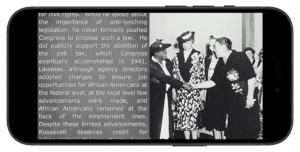
- Availability: Units 1-4, 6-19 (Unit 5 does not yet have videos)
- Format: Side-by-side scrolling text with historical images
- Features:
- Vocabulary terms are highlighted in the scrolling text
- Integrated audiobook narration
- Mr. Loomis presents the introduction and conclusion
- Includes goals for the lesson and the big idea at the start of the video
- Chapters manually added to make facilitate finding or linking to content in the videos
- Manually uploaded transcripts (100% accurate, not auto-generated) published as closed captions
- Linked from: AP US History (higher reading level) pathway
- Advantages: Many more images than text versions (about 50-100 per reading); integrated text and audio; highlighted vocabulary for easy identification; can be played at different speeds; students can turn off audio and read as text scrolls; accurate closed captions enable high-quality auto-translation; can be used to create EdPuzzle assignments
- Disadvantages: Vocabulary terms are highlighted but not defined in the video; requires a device and internet connection
Lecture Videos (Lower Reading Level)
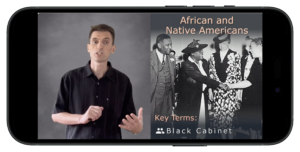
- Availability: Unit 0 (review) and Units 9-19 only
- Format: Jonathan teaching conversationally on left side of screen, images on right
- Features:
- Based on the simplified (lower reading level) text
- More conversational teaching style
- Only essential vocabulary terms
appear on screen (not all vocabulary)
- Full text available via YouTube closed captions
- Chapters manually added to make facilitate finding or linking to content in the videos
- Manually uploaded transcripts (100% accurate, not auto-generated)
- Linked from: 1877 to Present (lower reading level) pathway
- Advantages: More personal, conversational teaching approach; good for students who benefit from direct instruction; can enable captions to see full text; accurate closed captions enable high-quality auto-translation; can be played at different speeds
- Disadvantages: No scrolling text unless captions are enabled; only essential terms shown on screen; not available for Units 1-8; requires a device and internet connection
No Advertising: Inquiry History does not monetize its YouTube channel. Students do not see ads when watching these videos.
Supplemental Resources
These materials support student learning and teacher instruction.
Student-Facing Supplemental Resources
Vocabulary Study Tools
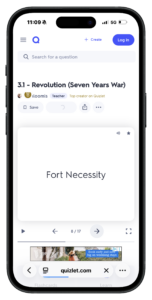
- Lesson Quizlet sets: Individual vocabulary set for every lesson
- Unit Quizlet sets: Combined vocabulary for each complete unit
- Essentials Quizlet sets: Pared-down key terms for each unit
- Essentials PDF vocabulary lists: Printable vocabulary lists with definitions for each unit
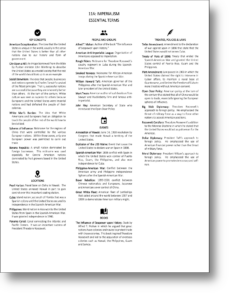
Essential Terms PDF
- Academic Vocabulary sets (for higher level readings only):
- Quizlet sets for each unit
- Contains SAT-level words and advanced vocabulary (not content-specific)
- Words presented in context within example sentences
- Linked directly from the readings
- Can be used by teachers to create additional activities
- A GoogleSheet of all the terms is available for teacher to use
Note-Taking Materials
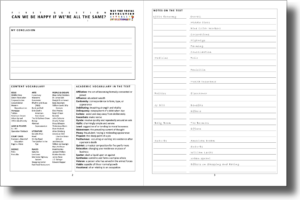
- Cornell-style note templates (PDF and Google Doc versions)
- Pre-filled section title versions available
- Vocabulary Structure: The notes documents provided for students begin with a list of content vocabulary for the lesson (words only, without definitions) as well as academic vocabulary with definitions that appear in that lesson. This structure provides an opportunity for pre-teaching the unfamiliar language that students may encounter in the text.
Review Materials
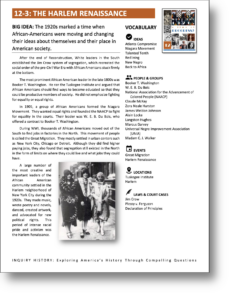
- Review videos for Units 9-19 (YouTube) based on the lesson summaries with study tips
- Review PDF booklets for Units 9-19 with the lesson summaries and essential vocabulary
Teacher-Facing Supplemental Resources
Planning & Implementation
- Teacher’s Guides (PDF)
- Comprehensive guide for Units 9-19 (1877 to Present)
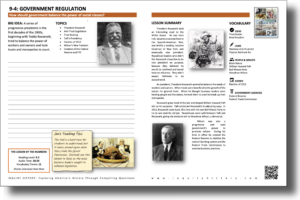
Teacher’s Guide - Basic guide for Units 1-8 (Full AP US History course)
- The tips section in the teacher’s guide provides suggestions for teaching difficult topics, especially for lessons that deal with sensitive or challenging topics
- Comprehension, Personal Reflection & Inquiry Questions
- Coverage: Unit 0 (review) + Units 9-19 (all lessons)
- Question Count: 8-15 questions per lesson (varies by lesson)
- Question Types:
- Comprehension questions: Based on the reading or video content; can be used with either reading level or video format
- Personal reflection questions: Prompt students to connect history to their own lives and the present day
- Inquiry question: The final question for every lesson is always the supporting question for that lesson, giving students an opportunity to practice inquiry thinking
- Uses:
- Embedded in EdPuzzle videos for Units 9-19
- Available as a standalone resource for teachers to use during instruction or assign to students
- Can be adapted for class discussions, exit tickets, or formative assessments
- Examples of Personal Reflection & Present-Connection Questions:
- “What are some ways the Internet and smartphones are similar to the birth of radio in the 1920s?”
- “Have you personally witnessed anti-Asian or anti-Pacific Islander discrimination, either in person or online?”
- “Do you think our country is making progress toward racial justice?”
- “Would you have been brave enough to be one of the Little Rock Nine? Why or why not?”
- “Was your family refugees from Vietnam, Laos, or Cambodia because of the Vietnam War, or do you know anyone who was?”
- Pedagogical Value: Questions emphasize both comprehension of historical content AND opportunities for students to connect history to the present, supporting deeper engagement and relevance
- Primary Source Quotations Database
- Google Sheet with 550+ paragraph-length primary source quotes (plus select historian quotes) organized by unit (Units 1-18)
- Many quotes drawn from released AP US History Document-Based Questions
- Quick reference tool for document analysis, discussion prompts, writing scaffolds, and assessments
- Blooket and Gimkit Academic Games
- Teachers can export any Quizlet set to quickly create Blooket and Gimkit games for students
Assessments (Units 9-19)
Inquiry History provides two different assessment options for each unit (Units 9-19), designed to meet the needs of students with varying reading levels and language abilities. Both are 20-question multiple-choice unit assessments.
Assessment Type 1: Paper-Based (Traditional)
- Format: Print-ready, paper-based, 20 multiple-choice questions per unit
- Question Sources: Created using released items from state-level assessments, plus original questions
- Features: Many questions include artifacts (pictures, cartoons, primary source quotes) that students must analyze
- Reading Level: Higher vocabulary and reading demands
- Challenge: Some students struggled with these assessments due to the heavy reading and vocabulary requirements. Language barriers sometimes prevented students from demonstrating their historical knowledge.
Assessment Type 2: Google Forms (Accessible)
- Format: Google Forms, 20 multiple-choice questions per unit
- Design: Simplified question design at a lower reading level
- Features: Questions can be answered based exclusively on information from the unit summaries (students who understood the summaries can succeed even if they missed detailed readings)
- Accessibility: No artifacts, just questions and answer choices. Designed so students who are not strong readers can still access the questions and demonstrate what they learned.
- Purpose: Created to remove language barriers and allow students to show their understanding of history without reading comprehension or ability to decipher historical artifacts getting in the way.
Coverage: Both assessment types are available for Units 9-19 (US History 1877 to Present)
Teacher Flexibility: The multiple choice tests provided are intended as one option for teachers to choose from. Teachers may elect to use these assessments as-is, but they may also create their own assessments that drive towards higher-order thinking, or they may choose to combine the multiple choice tests with a supplemental assessment tasks such as an essay or short writing piece to assess students’ other abilities, such as historical thinking and evaluating primary sources.
Teacher Access: All assessments are available to teachers who email in************@***il.com and provide evidence of being an educator (teacher email from Hawaii or elsewhere, etc.). These materials are not publicly available to ensure students do not have access.
📚 Unit & Lesson Contents
For the complete listing of all the units with their compelling questions, lessons, supporting questions, and topics covered, see Inquiry History Units.
🔗 Links to Materials & Resources
Primary Content Delivery
- PDF Booklets (Zip File)
- PDF Booklets – Translations (Zip File)
- Full AP US History Course Online Readings (Website)
- 1877 to the Present Online Readings (Website)
Vocabulary Study Tools
- Quizlet Sets (Quizlet Folder)
- Essential Terms Vocabulary Lists PDFs (Zip File)
- Academic Vocabulary (GoogleSheet)
- Academic Vocabulary Quizlet Sets (Quizlet Folder)
Note-Taking Materials
- GoogleDocs Templates for Units 1-19 (Google Drive Folder)
- GoogleDocs Templates for Units 9-19 (Google Drive Folder)
Review Materials
- Review Videos (YouTube Playlist)
Teacher Resources
- Comprehension, Personal Reflection & Inquiry Questions (Google Doc)
- Primary Source Quotations Database (Google Sheet)
Assessments
- Paper-Based Assessments (Units 9-19)
- Google Forms Assessments (Units 9-19)
- All assessments are available to teachers who email in************@***il.com and provide evidence of being an educator (teacher email from Hawaii or elsewhere, etc.). These materials are not publicly available to ensure students do not have access.
⭐ Key Differentiators
What Makes Inquiry History Unique
1. Inquiry-Based Design
- Every unit and lesson structured around meaningful questions
- Aligns with C3 Framework and modern social studies standards
- Moves beyond memorization to critical thinking
2. Accessibility for Diverse Learners
- Two reading levels (8th grade and 11th-12th grade)
- Side-by-side translations in PDFs (Ilocano, Japanese, Tagalog, Chinese, etc.)
- Auto-translation on website
- Human-narrated audiobooks
- Video options (scrolling text and teacher explanations)
3. Multiple Modalities & Flexibility
- Text (online and PDF)
- Audio (human-narrated)
- Video (scrolling text and teacher-led)
- Interactive study games
- Teachers can use entire curriculum or select units/lessons
- Materials adaptable to different contexts
- Works for in-person, hybrid, and remote learning
- Multiple entry points (text, audio, video)
4. Open-Source & Free
- All materials free to use and adapt
- Built from open-source texts
- Teachers can modify materials for their contexts
5. Created by Practicing Teacher
- Developed over 10+ years in real classroom at McKinley High School, Urban Honolulu
- Responsive to actual student needs
- Tested and refined with a diverse student population
- Supports students with varying reading levels in same classroom
- Enables differentiated instruction
- Reduces barriers for English Learners
6. Comprehensive Coverage
- Full AP US History: 19 units, 81 lessons covering all of US History
- 1877 to Present: 11 units (including review), 54 lessons
- Complete curriculum, not supplementary materials
❌ What Is NOT Included in Inquiry History
No Structured Lesson Plans
Inquiry History is designed to be a basic telling of US history for students, not as lesson plans for teachers. The materials are intended for students to engage with independently, primarily for homework or self-directed learning at home.
The Inquiry History Model:
- At Home (Independent Work): Students interact with Inquiry History materials: reading texts, watching videos, taking notes, studying vocabulary, etc.
- In Class (Teacher-Guided Work): Students engage in interactive activities, discussions, primary source analysis, educational games, and writing preparation prepared and designed by the teacher
This design recognizes that certain learning activities (like analyzing primary sources, engaging in historical debates, and preparing for complex writing tasks) are best facilitated by an expert teacher in the classroom. Inquiry History provides the foundational content knowledge that makes these higher-level classroom activities possible.
Alternative Use Case: Teachers new to US History content can use Inquiry History materials (especially lecture videos) as in-class foundational instruction before facilitating hands-on activities, allowing them to focus on student engagement while the Inquiry History materials establish historical foundations.
Teacher’s Guide Tips (Not Full Lesson Plans)
The closest Inquiry History comes to lesson planning support is the tips included in the Teacher’s Guide. These tips highlight pedagogical opportunities within specific lessons:
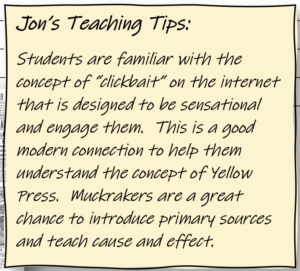
- Suggesting when to use contrasts between historical events or perspectives
- Identifying lessons where editorial cartoons would be particularly effective
- Recommending specific teaching strategies suited to particular content
- Offering ideas for different instructional approaches
However, these are tips and suggestions, not comprehensive, step-by-step lesson plans. The activities themselves are not scripted or written out in detail.
Philosophy: Why No Full Lesson Plans?
The decision not to provide structured lesson plans is intentional and grounded in teaching realities:
- Teacher Diversity: Teachers have vastly different teaching styles, strengths, and approaches
- Student Diversity: Students in different schools and communities have different needs, backgrounds, and learning profiles
- Practical Reality: Teachers rarely follow pre-written lesson plans strictly, they adapt and modify based on their context
- Diminishing Returns: Providing extensive lesson plans would be largely wasted effort, as most teachers would modify or ignore them in favor of their own approaches
The Inquiry History Approach: Provide robust base content materials and thoughtful teaching tips, then trust teachers’ professional judgment to design classroom experiences that work best for their students.
This model respects teacher autonomy while providing the comprehensive content foundation that makes great teaching possible.
🕐 Evolution & Formats
About the Creator
 Jonathan Loomis has been teaching since 2001, working in both high school and middle school settings. Over his career, he has taught regular US History, AP US History, AP Psychology, and a variety of other elective courses within social studies. He is a National Board Certified Teacher and has served as a resource teacher at the district level, supporting other educators in curriculum development and instructional practice.
Jonathan’s teaching is driven by a passion for engaging with diverse learners and ensuring that underrepresented students in the community have access to high-quality, accessible educational materials. His work has been recognized for its commitment to equity and inclusion in education.
Origin Story
The Problem (Early 2010s)
- Teaching AP US History and 10th grade US History (1877 to Present) at McKinley High School
- Students had lower reading levels and many were English Learners
- Available traditional textbook had good content but was too difficult for many students
- Major publishers only created Spanish translations, not the languages needed (Ilocano, Japanese, Tagalog, Chinese, etc.)
- Copyright concerns prevented simply scanning and modifying existing textbooks
- No translated or adapted materials available
The Catalyst (December 2015)
- Attended professional development workshop introducing the C3 Framework (College, Career, and Civic Life)
- At the time, Hawaii was in the process of revising their social studies standards (officially adopted by the Board of Education in 2018) to align with inquiry-based teaching
- Decided to create custom curriculum materials from scratch using open-source content
The Solution
Develop a complete US History curriculum that:
- Uses open-source historical texts (legal to adapt and share)
- Structures every unit and lesson around inquiry questions
- Provides the “base retelling” of history that teachers can use as a foundation for instruction
- Makes materials accessible through multiple formats and languages
Development Timeline: Responding to Student Needs
Phase 1: Original PDF Books (2015)
- Created initial curriculum as printable PDF booklets with vocabulary support
- Distributed as reusable classroom sets
Phase 2: Vocabulary Development & Quizlet Sets (2016-2017)
- Student Need: Students needed more support mastering critical vocabulary
- Response: Created comprehensive vocabulary study tools
- Quizlet sets for every lesson and unit
- Printable essentials lists
- Gamification options
Phase 3: Multilingual PDFs (2016-2019)
- Student Need: English Learners needed materials in their home languages (Ilocano, Japanese, Tagalog, Chinese)
- Response: Created side-by-side translated PDFs using Google Translate for multiple languages
Phase 4: Website Launch (2020 – Pandemic)
- Student Need: Remote learning required digital access; students needed materials at home
- Response: Converted all content to a website
Phase 5: Audio Version (2020-2021)
- Student Need: Students struggling with reading needed audio support
- Response: Jonathan’s mother volunteered to create human-narrated audiobooks for all units and lessons
Phase 6: YouTube Video Versions (2020-2021)
- Student Need: Visual learners needed more engaging format; students benefit from seeing more visuals along with the text
- Response: Created scrolling text videos
- Combined audiobook narration with 25-50 historical images per lesson
- Added manually uploaded transcripts for accurate auto-translation
Phase 7: Simplified Reading Level Version (2021-2024)
- Student Need: Post-pandemic, students reading at lower levels; original 11th-12th grade texts too difficult for many students in the 1877 to the Present course
- Response: Created simplified reading level materials
- 8th-grade reading level version of Units 9-19 with same structure and content but simpler language
- Added Unit 0 review to bridge students into 1877-present curriculum
Phase 8: Teacher-Led Video Explanations (2022-2024)
- Student Need: Students requested direct instruction: “Can you just explain this stuff to us?”
- Response: Created lecture videos for Units 9-19
- Jonathan teaching conversationally alongside historical images
- Based on simplified texts
🔮 Future Development
Inquiry History continues to evolve based on student needs and teacher feedback. Planed improvements include:
- Complete scrolling text videos for Unit 5
- Complete review videos and PDFs for Units 1-8
- Develop print-ready versions of the lower reading level texts
- Overcome technical challenges so Chuukese and Marshallese translations are options on the website
- Create interactive assessment tools and practice materials
🙏 Acknowledgements
Inquiry History would not exist without the support and contributions of many individuals:
McKinley High School Social Studies Department: Special appreciation to colleagues and supporters who have helped develop and refine this project over the years.
Audio Recordings: Jonathan’s mother generously agreed to read and record the entire textbook in her retirement. Her human-narrated audio recordings have been invaluable in making the curriculum accessible to all students.
Students: The students at McKinley High School have inspired this work and provided valuable feedback throughout the project’s development. Their needs, challenges, and successes have shaped every phase of Inquiry History’s evolution.
⚖️ Copyright & Licensing
Creative Commons Attribution 4.0 International License
Inquiry History is entirely open source, developed from open-source materials, and is free for anyone to use or edit, so long as it is not sold.
You are free to:
- Share — copy and redistribute the material in any medium or format
- Adapt — remix, transform, and build upon the material for any purpose, even commercially
This license is acceptable for Free Cultural Works. The licensor cannot revoke these freedoms as long as you follow the license terms.
Source Materials
Open-Source Textbooks and Image Sources
All historical content and images are drawn from the following open-source repositories:
These sources provide the foundation for all unit and lesson content, with all unit/lesson introductions and conclusions written by Jonathan Loomis.
📧 Contact
Website: inquiryhistory.com
Creator: Jonathan Loomis, McKinley High School, Honolulu, Hawaii
Email: in************@***il.com