
TRANSLATE
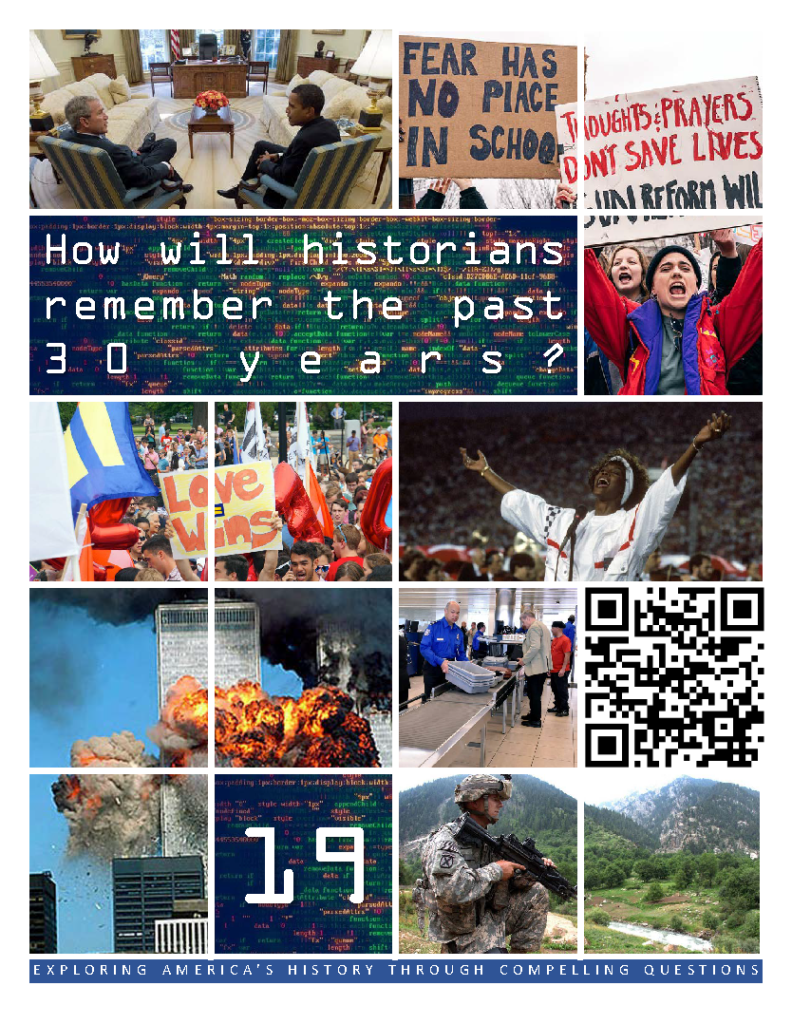
This final unit of our study of American history has asked you to do something historians usually avoid: judge the present like a historian, even though we do not yet know how the story ends. Still, the past 30 years have raised a set of big questions that we will have to answer when we decide what this era meant.
When we look back, will we describe these years as a time of American influence and power? If so, will we decide that American power made the world safer and more just? Or will we decide that intervention created new problems the United States could not control?
Perhaps, we will define this era primarily through the lens of fear and security. Will we remember the War on Terror as a necessary defense of democracy? Or will we remember it as a period when Americans paid an enormous price in lives, money, and civil liberties without getting the safety we were promised?
Looking back years from now, will the biggest story be the transformation of the American people? Will demographic change, immigration, and generational turnover be what reshaped American culture and politics more than any single election or war?
Will these decades be remembered as the next chapter in a longer struggle over race, justice, and belonging? Perhaps they will end up being the final chapter in that struggle!
What will we say about our government and politics in this era? Is our current situation unique, or just more of the same division we’ve seen before?
Perhaps the greatest change will be the shift to the Information Era and the way the internet and our devices have revolutionized our way of life.
So, when the details blur and today’s headlines are forgotten, what will remain as the central story? What do you think: How will historians remember the past 30 years?
CONTINUE READING